Showing posts with label life on mars. Show all posts

Monday, 15 March 2021

Eleven Great Sci-Fi and Fantasy Shows On The BBC That Aren't Doctor Who - Part 2

This is part 2 of my dive into the unmapped, shadowy depths of the BBC, hidden beyond all human knowledge, where in the darkness lurk strange, bizarre science fiction and fantasy productions that are not even slightly Doctor Who. You can read part 1 here.

The Cipher

When 16-year-old genius Sabrina (Anya Chalotra) cracks The Cipher, an impossible online puzzle, she is recruited by a mysterious organization to help in the hunt for a serial killer targetting scientists. Although this BBC audio drama/podcast is also about conspiracies and medical mysteries, The Cipher exchanges the bleak horror of Tracks for a rollercoaster of sci-fi concepts and 180-degree twists in every episode.

Life On Mars

So this is a show about a time travelling policeman, starring John Simm, and it's still not Doctor Who. Instead it's a modern take on Mark Twain's Connecticut Yankee. By-the-book policeman Sam Tyler suffers a head injury which sends him back in time from 2006 to the 1970s, where he finds himself working for DCI Gene Hunt (Philip Glenister), a character who positively embraces the non-politically-correct policing attitudes of the era. As we all know, it is the law that police officers are always paired up on the basis of opposing personality traits, and Life On Mars features possibly the most explosive pairing in any book, movie or TV series ever.


DEVS

Written by Alex Garland, produced by FX and broadcast by the BBC, DEVS is a cyber thriller about quantum computer programmers working for a secretive tech company. Lily (Sonoya Mizuno) gets herself hired in order to investigate her boyfriend's disappearance, while CEO Forest (Nick Offerman, channeling Jeff Bridges) tries to control... well, everything. DEVS features beautiful, chilling set design and lighting which underscores some intense performances and a neat sci-fi concept.

What We Do In The Shadows

This American TV series spins off the original New Zealand movie, set in the same reality but featuring a new household of flat-sharing vampires living on Staten Island. It's only broadcast by the BBC but could easily pass for a britcom, with shades of Being Human and The Office, featuring The I.T. Crowd's Matt Berry and introducing the brilliant concept of energy vampires. Funny and dark.

Fort Salem

One more American TV series brought to the UK and broadcast on the BBC, Fort Salem is set in an alternate timeline where the Salem trials ended with the witches agreeing to become the U.S. Army. Cut to the present day where three witch cadets, Raelle, Tally and Abigail chant their way through their military training under the shadow of General Sarah Alder, learning how to use sound-based magic and who to trust, as the army gears up to fight the Spree, a terrorist witch faction.

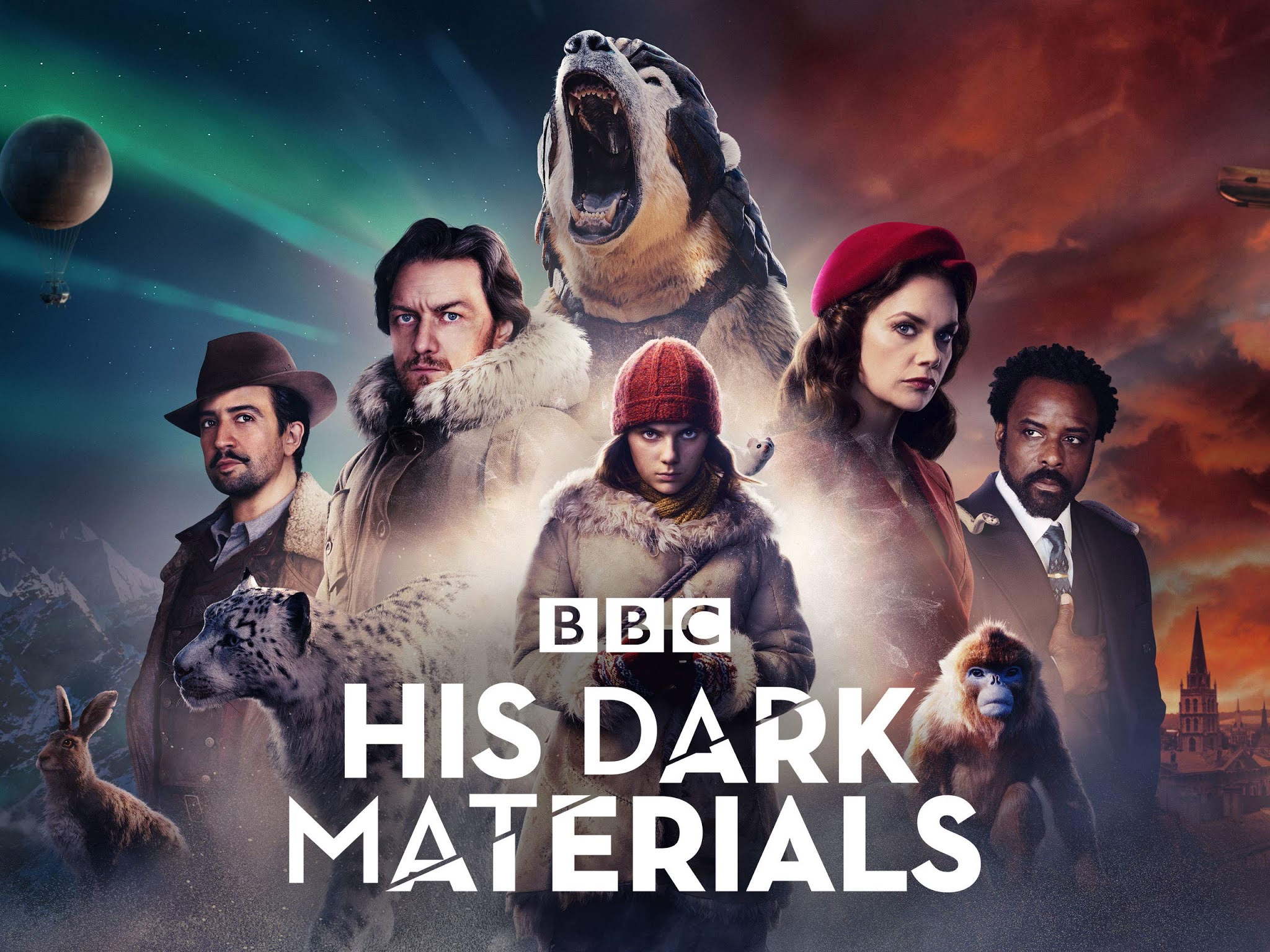
His Dark Materials

I have saved the best until last. This non-Doctor-Who fantasy series, based on the books of Philip Pullman, is a georgeous adaptation, innovative in the way the plot is re-worked for television, and at the same time extremely faithful to the characters, settings and overall story. It's more faithful and more magical than the 2007 movie, and unlike the movie the antiestablishment theme is not diluted. The icing on the cake is the casting and acting - Dafne Keen as Lyra, Ruth Wilson as Mrs. Coulter, James McAvoy as Asriel and Lin-Manuel Miranda as Lee Scoresby.
Friday, 11 February 2011

Is There A Doctor In The House? [Review: Outcasts]

The challenge for every BBC producer on a sci-fi show: to not end up making another Doctor Who. Other UK channels don't really worry about this, that's why ITV were able to make Primeval. However I suspect it’s thanks to this creative pressure that the BBC came up with Life On Mars and Being Human.

The first episodes of a new eight-part series, Outcasts, premiered this week and it does seem to promise something different. Carpathia is a ten-year-old off-world colony with a few teething problems. They’ve survived some sort of plague, there are divisions between the trigger-happy security officers and the emerging bureaucrats, and everyone has some kind of secret past or emotional baggage. Meanwhile a shipload of refugees from disaster-stricken Earth repair their damaged ship in orbit, hoping to survive the dangerous atmosphere and join the colony.

Ashley Walters and Hermione Norris

The scenario is colonial sci-fi in the tradition of countless Golden Age authors – Anne McCaffrey springs to mind, as does the Heorot series by Larry Niven and other authors, and the characters also come straight from this sub-genre: in particular Jamie Bamber's maverick anti-hero Mitchell.

This is the kind of situation where The Doctor and Amy would leap in, resolve everything quickly with a combination of luck, smarts and that annoying sonic screwdriver thingy, then disappear during the celebrations. In the absence of this wizard and his magic wand, the colonists of Carpathia will be forced to deal with their own problems, and the consequences of their mistakes will be played out in full. Watch this space.

Tuesday, 11 August 2009

The Machines

I was thinking about the various plot devices that allow time travel. In addition to opening the way for a time travel plot, the nature of the device can itself be a symbol, or it can add to a novel or film in other ways - it can give a film a unique style, say something about the traveller, or it can be a source of humour.

Before H.G. Wells, time travel was something spiritual - the ghosts of Christmas Past or Future in A Christmas Carol - or accidental, as in the blow to the head of the Connecticut Yankee. Wells introduced the mechanical Time Machine, bringing time travel into the realm of human control. These trends continue in more recent sci-fi - mechanical Time Machines include the garage physics experiment in Primer, while accidental time travel includes the genetic disorder described in The Time Traveller's Wife. The blow to the head method is also alive and well in Life On Mars, a series heavily inspired by the Mark Twain novel. There are less spiritual time travellers these days. However it makes perfect sense, for example, that Nick Hornby's Sam might be sent back to revisit key moments in his life by his Tony Hawk poster as it represents a kind of father figure/guardian angel.

I've mentioned Kate and Leopold before: it's not my favourite film. However it is a good example of time travel symbolising the risks that are taken in life; and this is portrayed as literally jumping off a bridge.

The bizarre series of committee meetings that led to the creation of the Tardis has been well described. However I think it's also reasonable to think of the Police Box as an authority image, which along with the Doctor's title, is consistent with Doctor Who's interventionalist themes. Another telephone box time machine features in Bill and Ted's Excellent Adventure, perhaps as a reference to Doctor Who, but this time the process of time travel becomes a comic search through a telephone directory and network.

My final example is a classic time machine: the deLorean in Back To The Future - and as Dr. Emmett Brown says: "The way I see it, if you're gonna build a time machine into a car, why not do it with some style?"